





















How Environmental Charter Schools Cultivates Change, from the Ground Up
By Jen Fenton and Alison Suffet Diaz
In the heart of Los Angeles, amid neighborhoods often defined by economic hardship and their limited access to green spaces, Environmental Charter Schools (ECS) is rewriting what is possible for public education. Founded in 2001 on the belief that all students deserve access to rigorous academics and meaningful engagement with the natural world, ECS has created a network of four schools (two middle schools and two high schools) where learning extends beyond classroom walls and into gardens, wetlands, and the communities it serves. In fact, from Gardena and Hawthorne to Inglewood and Lawndale, ECS has become a national model for sustainability, equity, and experiential learning that prepares its students not only for college and career, but for civic leadership.
While the neighborhoods surrounding ECS have crime rates higher than the national average, lower levels of educational attainment, and higher proportions of poverty, ECS students live a remarkably different story. 95 percent of students attend school each day; 100 percent of students participate in outdoor education programs each year; 98 percent graduate from high school; and 98 percent of graduates are admitted to college or universities. These results are not by accident; they are the result of a deliberate, mission-driven curriculum that prioritizes whole-child development, environmental stewardship, hands-on learning, and critical thinking.
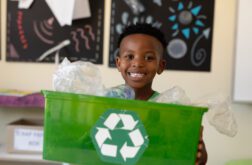
School grounds model ecological principles in action and feature fruit trees, native plants, composting systems, and solar panels. Gardens and outdoor classrooms double as science labs and gathering spaces. Water-efficient irrigation systems and recycled materials reduce environmental impact while teaching that sustainability can start anywhere. Even outdoor time, movement, and mindfulness activities are embedded throughout the day to promote physical and mental health. Every feature, from the solar panels to the arroyos, is a deliberate part of this overarching approach to intentionally design schools that are green, inclusive, and nurturing, to provide students with the stability and inspiration they need to thrive.
Learning That’s Rooted in the Real World
At the core of ECS’s success is its award-winning, best-practice model that integrates small class sizes, low student-to-counselor ratios, authentic assessments, and outdoor education opportunities. Academic material is linked directly to life and careers beyond the classroom, which gives students a sense of purpose and belonging that transcends test scores. ECS believes that every student, regardless of their socio-economic background, plays an active role in the environment and is empowered to become an effective agent of change. Through interdisciplinary lessons that connect reading, math, science, social studies, and civic engagement, students examine pressing issues such as climate change, food security, water quality, and environmental justice.
By emphasizing applied learning, we cultivate academic mastery, problem-solving skills, and self-efficacy thereby empowering 6–12th graders to thrive in college and to lead, as well as contribute to, a sustainable, equitable world.
Green Ambassadors: Cultivating Change from the Ground Up
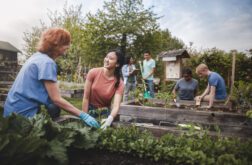
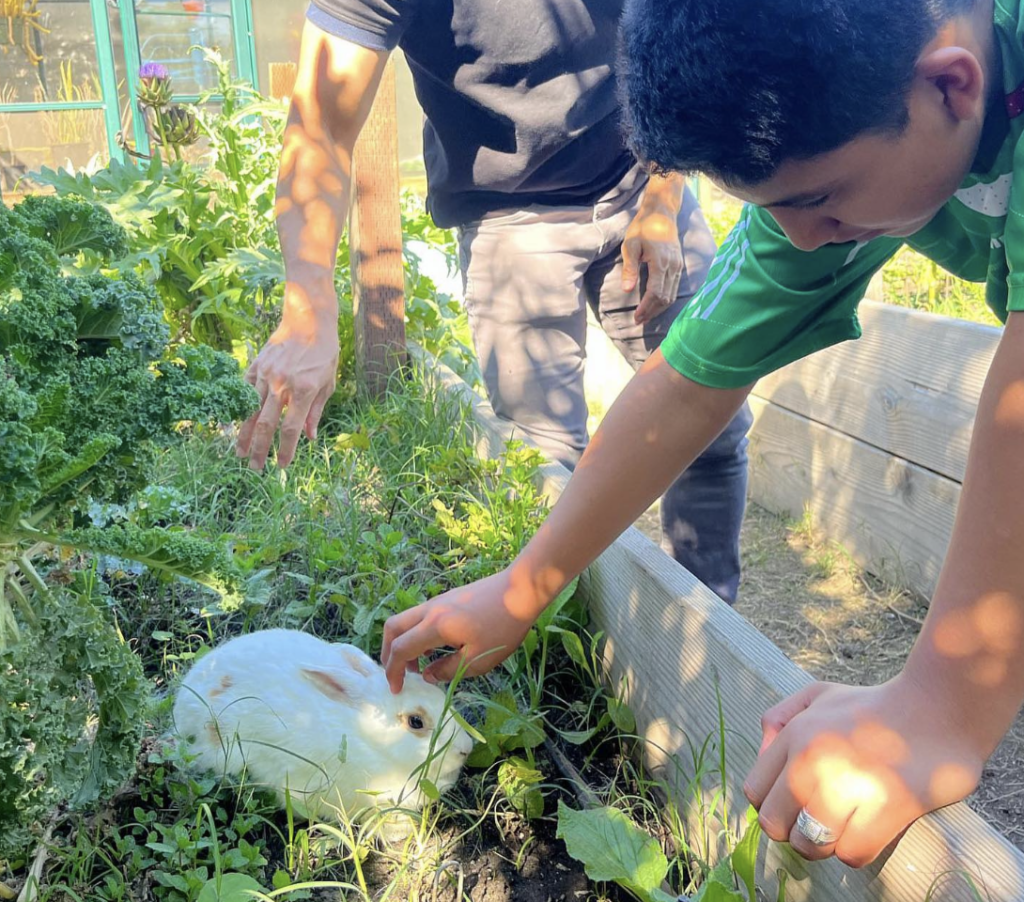
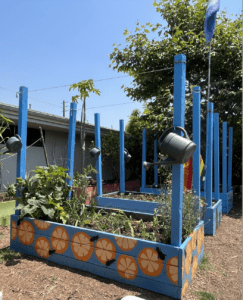 One of ECS’s most distinctive program offerings is its Green Ambassadors (GA) course, which has been a cornerstone of its curriculum since 2001. Offered across all ECS campuses, these “green” lessons transform sustainability from an abstract concept into real-world solutions and lived experience. For example, when studying ancient civilizations and agricultural systems, students build raised garden beds, install rainwater catchment systems, and design worm composting stations directly on campus. This connects core content to emerging issues in the community, such as food security, water conservation, and waste reduction, while developing critical thinking and collaboration skills. As part of a horticulture-based unit of study, GA students will spend several hours each week tending to campus gardens, learning plant nutrition, soil structure, and organic pest management. And when harvest time comes, these students are allowed to bring seasonal produce home to share with their families, creating a tangible link between what they learned in school and household sustainability.
These gardens serve as living laboratories and organic spaces on an urban campus where science, service, and reflection all intersect. Not only is there an understanding of how ecosystems work, but also why stewardship truly matters. Students see that core content isn’t confined to textbooks, but rather it is something they can touch, taste, and even grow. They become advocates, innovators, and caretakers, and develop an understanding of their own power to make a difference.
Outdoor Education: From Campus to Conservation
Another defining feature of ECS is its commitment to outdoor education. Every 6-12th grader is encouraged to participate in immersive free field trips that promote healthy adolescent development while deepening environmental awareness. Through long-standing partnerships with organizations like The Pali Institute, Catalina Environmental Leadership Program, and NatureBridge, students experience multi-day adventures in the wilderness. These overnight trips, which are often the first-time students have ever slept outdoors or even hiked in a national park, are designed to strengthen self-confidence and teamwork. Participants also learn practical skills while reflecting on concepts like biodiversity, human impact, and conservation.
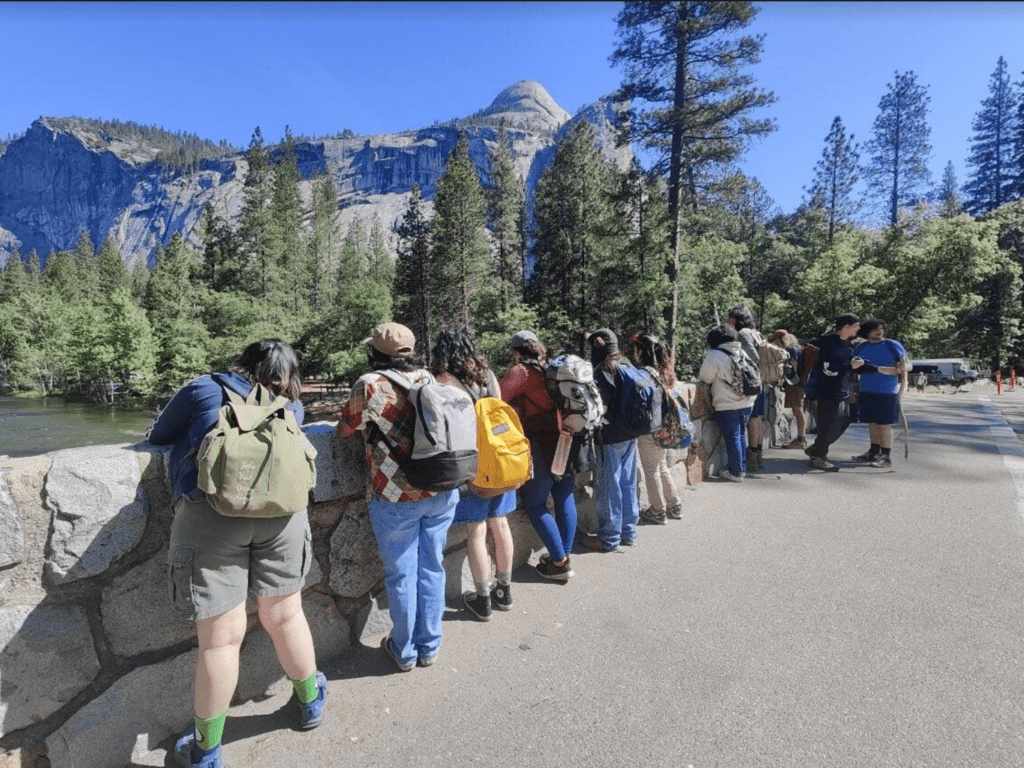 In middle school, for instance, students camp in the San Bernardino mountains (approximately 60 miles outside of Los Angeles), explore water systems and forest ecology. By high school, they are restoring nature trails, collecting data on local habitats and discussing environmental policy. But these experiences are not isolated field trips, they are integral to the ECS framework. This small network of charter schools recognizes that the students it serves often have limited access to safe outdoor spaces in their neighborhoods. Therefore, by underwriting 100 percent of the cost of these trips each year, ECS reinforces its commitment to equity and access to nature, and ensures every student can participate.
This approach to learning doesn’t stop with comprehending the environment, it extends to acting on behalf of it. Through the CA Serves Grant funded by the California Department of Education, seniors are asked to connect environmental sustainability with civic leadership. Each year, approximately 120 12th graders complete service-learning projects that promote “Leave No Trace” principles while attending a three-day excursion in Yosemite National Park. Additionally, as part of their culminating project, graduating seniors help oversee community clean-up and beautification events in order to transform local spaces while leaving behind a legacy of pride and stewardship. ECS students enter college or the workforce with academic skills, along with the mindset of being a changemaker who is ready to advocate for justice in their communities and beyond.
Partnership and Collaboration
Sustainability at ECS is not built in isolation, but rather thrives through collaboration. Over the past two decades, ECS has cultivated relationships with a diverse range of community organizations, businesses, and public agencies that share its mission of environmental education and equity. Partners like The Bay Foundation, Growing Great, Tree People, and the City of Gardena Willows Wetland Preserve offer hands-on opportunities to conduct field research, restore native habitats, and study local watersheds, while Ahmanson, Kinecta, Chevron, SoCal Gas and Enviroscape LA provide funding, mentorship, and industry exposure that shows how greening efforts can be applied across professional fields.
ECS’ most recent collaboration with El Camino College (ECC) and Climate Action for Schools (CAPS) and South Bay Workforce Investment Board (SBWIB) represents a natural extension of its sustainability focused curriculum. ECC’s new Sustainable Design Pathway offers students dual-enrollment opportunities to receive college credit for courses in sustainability, design and environmental sciences. SBWIB and CAPS sustainability specialist apprenticeship programs help students earn industry certification and receive on the job training that align with regional labor market demands. Offered to 9-12th graders, the coursework blends principles with practical applications in architecture, engineering, and renewable energy systems. By the time these students graduate, they will have fulfilled their high school requirements, completed a pre-apprenticeship and acquired skills that positions them for an apprenticeship, higher education, and employment in eco-related fields. Not only does this pathway bridge K–12 education with postsecondary learning and workforce readiness, it exemplifies how ECS is redefining education to meet the needs of the 21st century and the growing green economy.
A Culture of Equity and Inclusion
In neighborhoods where environmental injustices such as pollution, heat islands, and limited green space disproportionately affect low-income or minority residents, ECS demonstrates what is possible when equity and sustainability intersect. In addition to learning about realities connected to their own neighborhoods, students explore topics like water access, food deserts, and air quality through both scientific and social justice lenses. ECS also ensures access to resources and support systems needed to succeed. With 1:30 student-to-counselor ratios, built-in advisory periods, and strong family engagement, a culture exists where every learner feels known, supported, and valued. Educators and staff at every site consciously build relationships that instill trust and connection, in conjunction with targeted academic, social-emotional, and college-readiness support.
Family and community engagement is also integral to this culture. Parents are active partners in the educational process and are regularly invited to attend events or exhibitions that showcase student projects, volunteer in gardens, and participate in community celebrations that strengthen the school-home connection. To ensure these experiences remain relevant and inclusive, ECS regularly administers surveys and questionnaires to all its stakeholders and solicits feedback on school climate, communication, and program effectiveness. These data points identify both areas of strength, as well as opportunities for improvement, guiding leadership decisions and ensuring that all voices, particularly those from underrepresented communities, are heard and valued.
Looking Ahead: A Blueprint for the Future of Education
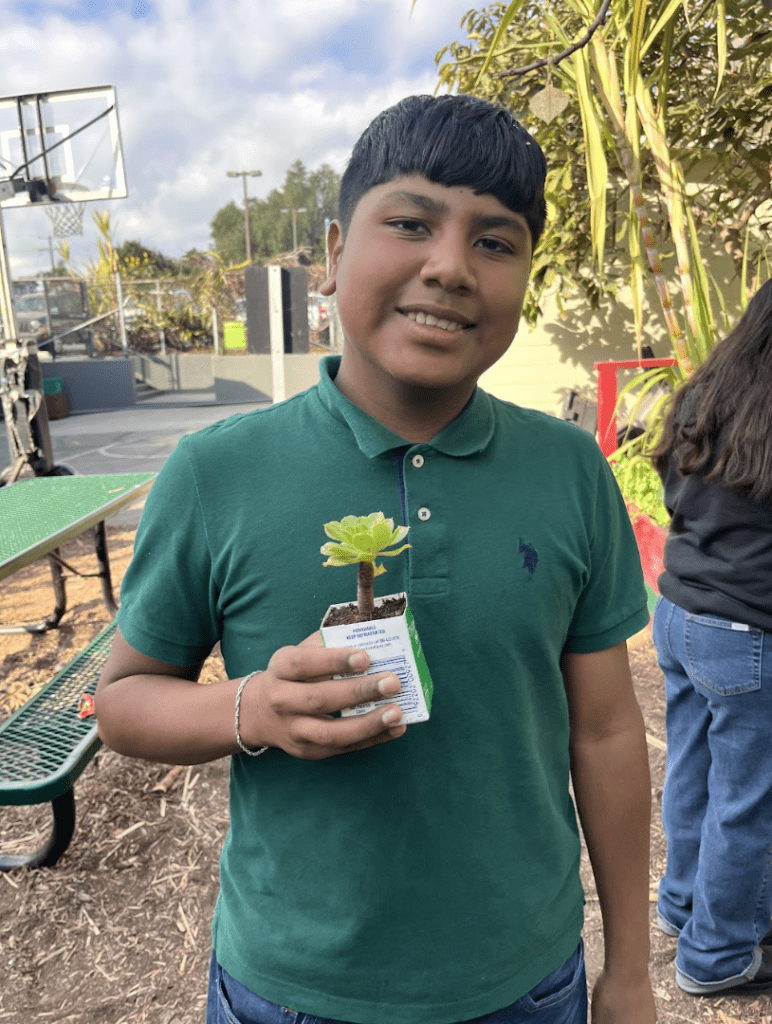 ECS’ success is a powerful illustration of transformation and growth. Over the past three years, students across all grades have made significant academic gains in both English and Math. Last year on CAASPP, the computer-based state-wide assessment for students in grades 3–8 and grade 11, 52 percent of test takers met or exceeded standards in ELA and 36 percent in Math, the highest rates ECS has ever seen. Specifically in ELA, students scored above grade-level proficiency for the first time since CAASPP testing began and in Math, students grew closer to proficiency by an average of 35 points. Furthermore, when asked on annual climate surveys, 86 percent of students anonymously reported that they believe there is an adult at school who always wants them to do their best.
With this strong foundation and a proven track record of success, ECS continues to build momentum and ensure that every student is not only supported, but truly empowered to thrive academically and emotionally. In doing so, ECS continues to prove that education and environmental responsibility are not competing priorities, they are interdependent forces for a healthier planet and a more just society. Through gardens and green pathways, civic action and scientific inquiry, ECS is an example where every lesson leads to stewardship, every student becomes a changemaker, and every campus is a living testament to what’s possible when learning and sustainability grow side by side.
Jen Fenton is the ECS director of Strategic Initiatives. She oversees grants, donor procurement, and the organization’s comprehensive communication plans for all stakeholders. Fenton is also an elected official and serves on the Board of Trustees for the Manhattan Beach Unified School District (since 2018). Fenton has a B.A. in Communications from the University of Pennsylvania and a J.D. from Loyola Marymount University.
Alison Suffet Diaz is the ECS founder and director of Growth + Sustainability. She founded ECS in 2001 and under her leadership ECS was chosen as one of three national finalists in President Obama’s Race to the Top Commencement Challenge. Suffet Diaz holds a B.S. in Business from State University of New York, Albany, and a J.D. from Temple University Law School.