
















By Dr. Kevin Miramontes
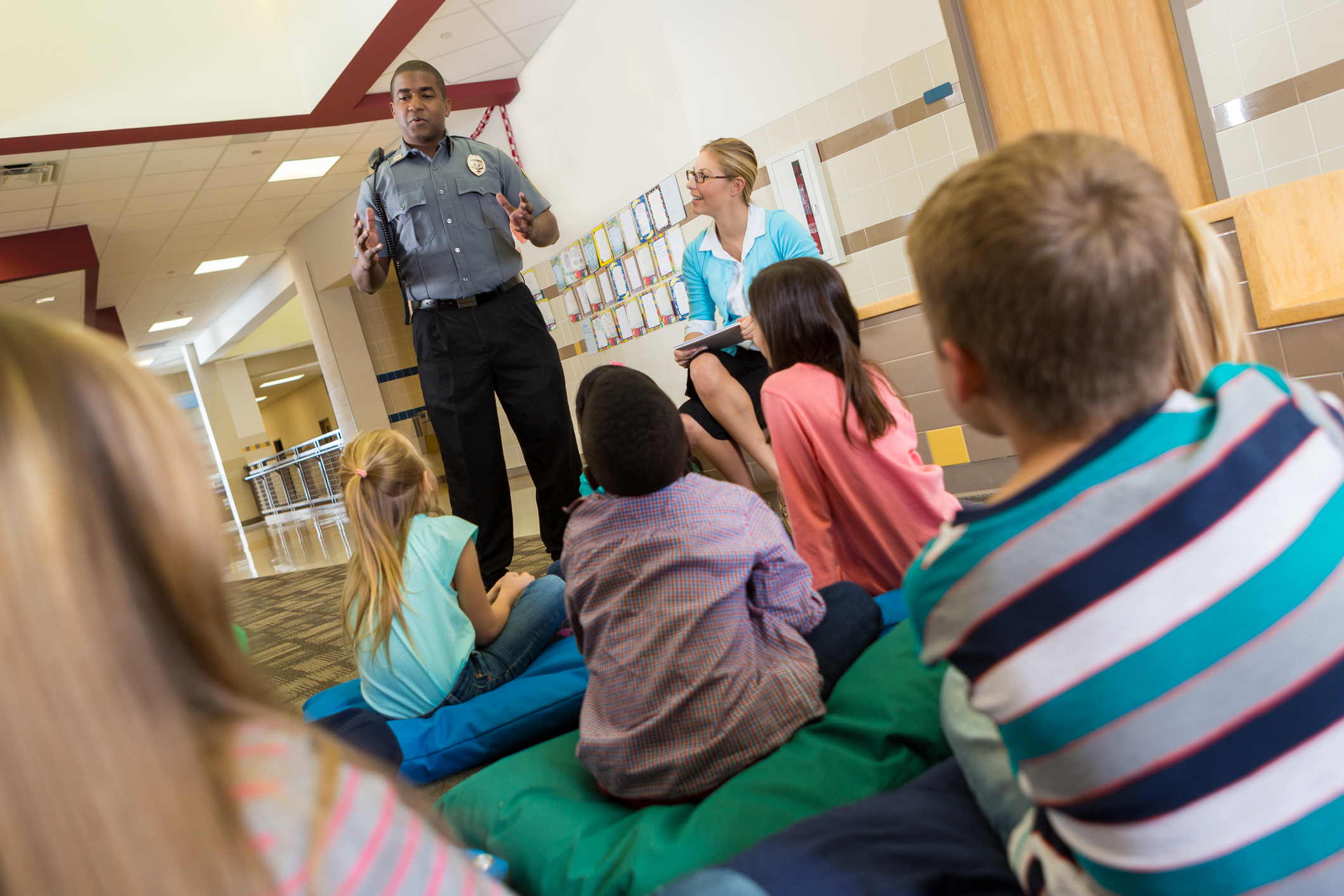
Every summer, school leaders across California prepare for a new school year by reviewing one of the most important leadership documents on campus; the Comprehensive School Safety Plan (CSSP). Leadership teams update emergency contacts, verify staff assignments, review evacuation procedures, schedule required drills, and ensure the plan meets California’s legal requirements (California Education Code, 2025).
These are important responsibilities, and they should remain an essential part of every school’s preparation for the year ahead. However, after spending several years researching CSSPs and working alongside school leadership teams, I have found myself asking a different question.
Has anything changed in our community that should change our plan?
That single question changed the way I think about school safety. For years, we have treated CSSPs as documents that guide our response to emergencies — revising them, approving them, training staff, and placing them on the shelf until they are needed. There is nothing inherently wrong with this process. In fact, California’s approach to school safety planning has created greater consistency, clarified expectations, and strengthened coordination among schools and emergency responders.
The challenge is that our communities rarely remain the same from one year to the next.
Over the past several years, school leaders have navigated school violence, increased student mental health concerns, rapidly evolving technology, cybersecurity threats, social media misinformation, natural disasters, and community concerns related to immigration enforcement. While each situation has been different, they all shared one characteristic: they required leadership decisions that extended beyond the procedures written in a safety plan.
That realization led me to rethink what a CSSP is intended to accomplish.
The greatest value of a school safety plan may not be documenting how a school will respond to emergencies, but providing a foundation from which leadership teams continuously learn, adapt, and improve as their communities change.
School safety has never been solely about compliance; it has always been about creating the conditions that allow students to learn.
Decades ago, Abraham Maslow reminded us that safety is one of our most fundamental human needs (Maslow, 1943). Before students can fully engage in learning, they must first experience school as a place where they feel physically secure, emotionally supported, and connected to trusted adults. That makes school safety more than an operational responsibility — it makes it a leadership responsibility.
As each school year begins, I would encourage every leadership team to look at its CSSP a little differently. Rather than asking whether the document is complete, ask whether it still reflects the realities of the community it was designed to serve.
That conversation may be the most important safety review your team has this year.
From planning to leadership
One of the biggest surprises during my research (Miramontes, 2022) wasn’t what schools included in their CSSPs; it was what happened after the plans were completed.
Across the schools I studied, leadership teams invested tremendous time developing thoughtful, well-organized plans that clearly defined roles, established emergency procedures, and met every required component. In many ways, the system worked exactly as intended.
The more I reflected on those findings, however, the more I realized that effective school safety depends on something more than a well-written document.
Communities are constantly changing. A new housing development shifts enrollment patterns. A wildfire changes evacuation routes. New technologies create opportunities and risks that did not exist a year earlier. Sometimes the biggest changes are less visible. Families bring new concerns through the school gates each morning, and those concerns inevitably shape how schools think about safety.
That was the leadership lesson that stayed with me long after the research was complete.
Standardized safety plans remain essential because they create consistency. During an emergency, staff need clear expectations, first responders need common procedures, and leadership teams need an organized framework for decision-making. Yet no document can anticipate every challenge a school community will face.
If the past several years have taught us anything, it is that not every challenge comes with a checklist. We know how to update emergency contacts, schedule drills, review procedures, and meet state requirements. Those responsibilities remain essential. The harder questions emerge when communities change.
How do we reassure families after a tragedy that occurred somewhere else? How do we respond when concerns in the community begin affecting student attendance or well-being? How do we prepare for risks that were not even part of the conversation a year ago?
Those questions cannot be answered by a document alone. Leadership scholars describe these as adaptive challenges: problems that require organizations to learn and adjust rather than simply apply existing procedures (Heifetz, Grashow, & Linsky, 2009). They require leadership teams that are willing to listen, learn, and adapt alongside the communities they serve.
Looking back, I don’t believe the schools I studied needed different safety plans. I believe they needed a different way of thinking about those plans.
Instead of viewing the CSSP as the end of the planning process, perhaps we should begin viewing it as the beginning of an ongoing leadership conversation.
Over the years, I have found that the most productive school safety discussions rarely begin with, “What does the plan say?” Instead, they begin with questions that help leadership teams determine whether the plan still reflects the realities of the community they serve.
As I prepare for each new school year, I find myself returning to four simple questions. They are not intended to replace the CSSP. Instead, they help leadership teams use the plan as it was always intended — as a living guide that evolves alongside the students, staff, and families it was designed to protect.
Four conversations every leadership team should have

A CSSP is more than a document to review each year. It is an opportunity to strengthen leadership, build relationships, and ensure the school’s safety practices continue to reflect the needs of the community it serves.
As your leadership team prepares for the coming school year, consider beginning with four conversations.
Conversation 1: What Has Changed Since Last Year?
Great school safety begins with understanding what has changed, not simply updating what already exists.
Every school year brings change. Some changes are obvious, such as new administrators, staff members, enrollment shifts, or updated district procedures. Others are less visible. Families may have new concerns. Students may be experiencing different challenges. Technology evolves, community priorities shift, and events beyond the school campus can quickly influence how safe students and families feel.
One of the easiest assumptions leadership teams can make is believing that because last year’s plan worked, this year’s plan is automatically ready.
Instead of beginning your review by asking, “What needs to be updated?” begin with a different question: “What has changed in our community since we approved this plan?”
The answers may come from attendance trends, student voice, conversations with families, discipline data, staff observations, or community partners. Some changes may require revisions to the plan; others simply reshape the conversations your leadership team needs to have. Both strengthen school safety.
Try this: Begin your first safety committee meeting by asking each member to identify one significant change they have observed since the previous school year before opening the CSSP.
Conversation 2: Whose Perspective Are We Missing?
The best safety plans reflect the voices of the communities they are designed to protect.
Leadership teams often include administrators, counselors, teachers, school resource officers, and district personnel. Those perspectives are essential. But some of the most valuable insights come from voices that are not always present during safety planning.
Students, parents, classified staff, and community partners each experience school differently and often recognize issues that administrators may overlook.
The goal is not to make every committee larger, but to make every conversation more informed.
As communities change, effective school leaders intentionally seek perspectives that help them understand how safety is experienced, not simply how it is managed.
Try this: Invite one stakeholder group that has not traditionally participated in your safety planning process to answer a single question: “What would help you feel more confident in our school’s ability to keep students safe?” Listen before you revise.
Conversation 3: What Have We Learned?
Every drill, every incident, and every concern provides an opportunity to improve.
Schools devote considerable time to conducting emergency drills and meeting required safety expectations.
What often matters just as much is the conversation that happens afterward. Rather than moving immediately to the next agenda item, effective leadership teams pause to reflect.
What worked well?
What created confusion?
What should we do differently next time?
Continuous improvement doesn’t require rewriting the entire plan every year. Often, the most meaningful improvements come from small adjustments in communication, staff training, team coordination, or family outreach; an approach consistent with organizational learning and continuous improvement (Fullan, 2020).
The strongest safety plans are not those that change the most, but those supported by leadership teams that continue to learn.
Try this: After your next drill or safety exercise, spend five minutes asking one question: “What did we learn today that should influence our future planning?” Record the answer while it is fresh.
Conversation 4: Will Our Students Experience This School as Safe?
The ultimate measure of school safety is not the plan we write; it is the confidence our school community experiences every day.
A school may have excellent emergency procedures, highly trained staff, and strong community partnerships. Yet if students do not feel safe, families do not trust school communication, or staff members remain uncertain about their roles during a crisis, there is still work to do.
Safety is experienced long before it is documented.
Students learn best when they feel physically secure, emotionally supported, and connected to adults they trust. Families are more likely to partner with schools when communication is transparent and relationships are strong. Staff members lead more confidently when expectations are clear and practiced consistently.
These conditions cannot be created by a document alone. They are created through leadership.
Try this: As your leadership team concludes this year’s CSSP review, end with one final question: “If I were experiencing this school as a student, a parent, or a new staff member, would I genuinely feel safe, informed, and supported?”
The answer may become the most meaningful measure of your school’s preparedness.
As each new school year begins, leadership teams across California will once again devote time to reviewing their CSSPs. Emergency contacts will be updated, drills will be scheduled, procedures will be reviewed, and committees will fulfill an important responsibility that helps keep our schools prepared.
Those efforts matter. Perhaps this year offers an opportunity to do something more. Before approving the final draft of your school’s safety plan, pause long enough to have four conversations:
What has changed since last year?
Whose perspective are we missing?
What have we learned?
Will our students experience this school as safe?
None of these questions require rewriting your CSSP. They require leadership.
Over time, I have come to believe that the strongest school safety plans are supported by leadership teams that continue to ask questions, learn from experience, and adapt as their communities change. A CSSP is not the destination; it is the starting point.
When leadership teams treat the plan as the beginning of an ongoing conversation rather than the end of a compliance process, school safety becomes more than a document on a shelf. It becomes part of the culture of the organization; a culture built on trust, continuous learning, shared responsibility, and an unwavering commitment to ensuring every student experiences school as a place where they feel safe enough to learn.
Perhaps that’s the real measure of an effective Comprehensive School Safety Plan; not whether it is complete, but whether it helps your leadership team become better prepared for whatever tomorrow may bring. Ultimately, the strength of a CSSP is not measured by how completely it documents the past, but by how effectively it prepares leadership teams for the future.
Kevin Miramontes, Ed. D., is an educator and AVID Program coordinator at Upland High School (Upland Unified School District). His doctorate dissertation was on Evaluating Comprehensive School Safety Plans for Equity and Efficacy.
References
California Education Code §§ 32280–32289.5. (2025). Comprehensive school safety plans.
Fullan, M. (2020). Leading in a Culture of Change (2nd ed.). Jossey-Bass.
Heifetz, R. A., Grashow, A., & Linsky, M. (2009). The Practice of Adaptive Leadership: Tools and Tactics for Changing Your Organization and the World. Harvard Business Press.
Maslow, A. H. (1943). A theory of human motivation. Psychological Review, 50(4), 370–396.
Miramontes, K. (2022). Evaluating Comprehensive School Safety Plans for Equity and Efficiency (Doctoral dissertation, California State Polytechnic University, Pomona).